
How to File a Workers’ Comp Claim in New York
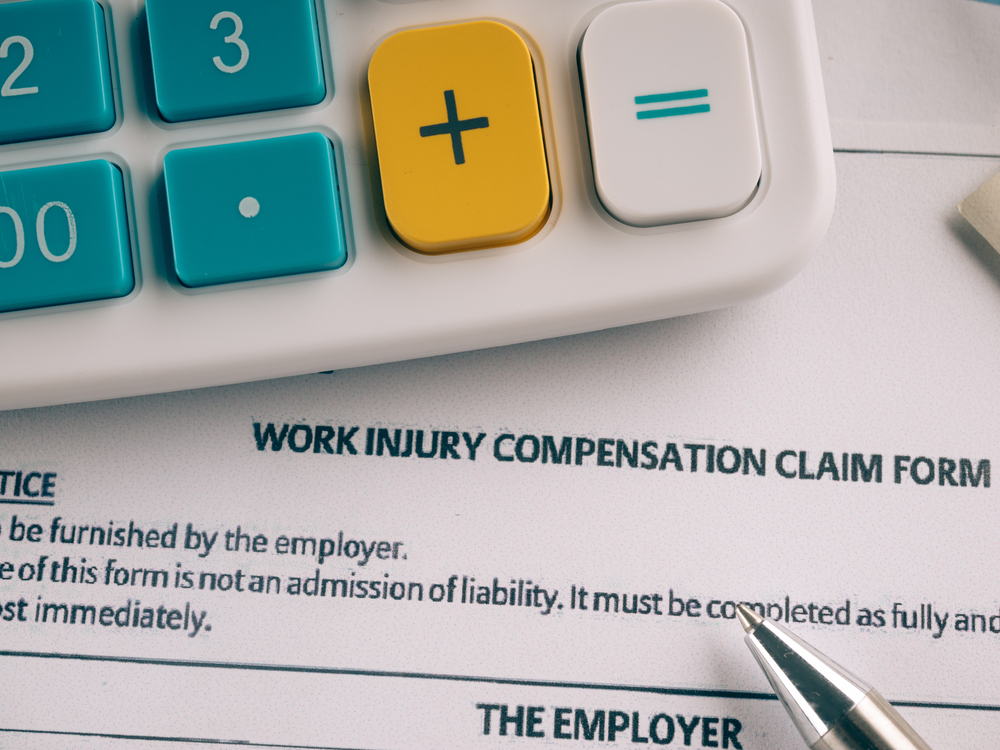 Learning how to file a workers’ comp claim in New York comes down to three things done in the right order: get treated by the right kind of doctor, tell your employer in writing within 30 days, and file the claim form with the Workers’ Compensation Board within two years.
The order matters more than the paperwork does. Almost everything that goes wrong in a New York comp claim can be traced back to something said, or not said, in the first month.
Not sure you did it right? Call Lewis & Lewis, P.C. at (716) 854-2100. Free consultation, answered around the clock.
This is Stage 1 of the New York Workers’ Compensation Resource Center.
What should you do in the first 72 hours after a work injury?
Get medical care, and get it from a provider authorized by the Workers’ Compensation Board. Then tell your employer in writing.

Attorney Emily Janicz
Partner Emily F. Janicz walks new clients through it the same way every time:
“Immediately after a workplace injury, the most important thing to do is to seek medical attention if you need it. It’s important to try to seek medical care from a doctor that accepts workers’ compensation insurance. The Workers’ Compensation Board authorizes providers to treat injured workers in New York State, so it’s ideal to go right off the bat to a Board-authorized provider. The next most important thing to do is to provide written notice of the injury.”
The reason the provider type matters this early is evidentiary. Only a Board-authorized provider’s opinion counts in front of a judge, outside of a genuine emergency. Treatment from an unauthorized doctor may still help your body. It will not help your claim. You can look up who is authorized through the Board’s health care provider search.
You do not pay for any of it. The carrier pays the medical bills directly, and no copay, deductible, or balance bill should ever reach you.
How long do you have to report a work injury in New York?

Thirty days. Workers’ Compensation Law § 18 requires written notice to your employer within 30 days of the accident, stating your name and address and describing in plain language the time, place, nature, and cause of the injury.
The Board can excuse a late notice in three situations: the notice could not reasonably have been given, the employer already had knowledge of the accident, or the employer was not harmed by the delay. Those are real defenses and they do get argued. They are also an argument you have to win, months later, in front of a judge, instead of a letter you could have sent this week.
Telling your supervisor verbally is not written notice, even if a dozen coworkers watched it happen.
A lawyer can send the notice for you, and there is a reason to let one:
“We can provide that written notice on your behalf, and I believe that that’s very helpful because it helps us set the tone, explain the case consistently from day one.” Emily F. Janicz, partner
What is the C-3 form, and what makes it tricky?
The C-3 is the Employee Claim, the form that formally opens your case with the Workers’ Compensation Board. You file it, not your employer, and under Workers’ Compensation Law § 28 you generally have two years from the accident to do it.
The form looks simple. Several questions on it are not.
“There are a few questions on the Workers’ Compensation Board claim form that are tricky. If you don’t know how to answer them, I see people often tell me after the fact, ‘Well, I didn’t know that’s what it was asking.’ And once they’ve answered it, it’s too late.” Emily F. Janicz, partner
The questions that cause trouble are the ones about how the injury happened, which body parts are involved, and whether you had prior problems with the same area. An answer that describes only your worst symptom can quietly leave a second injured body part out of the claim for good. A vague description of the accident can hand the carrier an argument about whether it arose out of your employment at all.
“You never want to be in the position where you’re trying to explain or correct something that’s already been said. It’s always best to say it correctly the first time.” Emily F. Janicz, partner
If you already filed and now suspect you got something wrong, do not assume it is unfixable. Some things can be amended. Call before you send anything else in.
Filed already and worried about an answer? Call (716) 854-2100 for a free review of what you submitted.
Who is covered by workers’ compensation in New York?
Nearly every employee in the state, including part-time and seasonal workers, and including workers who are undocumented. Coverage is not something your employer opts into.
Two groups wrongly assume they are outside the system.
Does being called an independent contractor mean you cannot file?
No. The label your employer uses does not decide the question. What decides it is how the work actually operates: who sets the schedule, who supplies the tools, who controls how the job gets done, and whether you can work for anyone else.
“Just because an employer calls somebody an independent contractor doesn’t mean that they are. We’ve had several claims where the person that was alleged to be an independent contractor was deemed to be an employee by the Workers’ Compensation Board.” Emily F. Janicz, partner
The Board makes that determination, not the company. If you have been handed a 1099 and told there is nothing to file, that is worth a phone call.
What is an occupational disease claim?
It is a claim for a condition that developed over time because of the nature of your work, rather than from one identifiable accident. New York treats it as its own category, and most workers have never heard of it.
“People don’t realize that there’s a whole category of workers’ compensation claims called occupational disease claims, which are claims that develop over time based on the nature of the work that you did. People don’t realize that you can have an occupational disease claim for any body part because of the work that you did.
I had a client who was a cabinet maker, and the way that he did his work, he would crane his neck in a particular position consistently throughout the day, and after 30 years his neck was shot.” Emily F. Janicz, partner
The filing clock works differently here. For an occupational disease, the two-year period under § 28 runs from when you became disabled and knew, or should have known, the condition came from your work, whichever happens later. Someone who has been sore for a decade has not necessarily missed anything.
Can you file a claim if you already had a bad back?
Yes. A pre-existing condition does not disqualify you, and this is the single most common reason people talk themselves out of a valid claim.
“People say, ‘Well, I’ve had a bad back forever. What happened at work is minor. I shouldn’t have a claim here.’ But that’s not true. The employer takes you as they find you. The insurance company takes you as they find you. Even if you had a bad back, even if you were treated all along, if something happens at work to act on that, to make it worse, you still have a claim.” Emily F. Janicz, partner
She has the case to go with it:
“I’ve had clients that were talking to a doctor about having a knee replaced and then slipped and fell at work, and they still had a knee case, because something happened at work to make it worse, to make them need that knee surgery sooner.”
The carrier will still raise your history. There is a doctrine called apportionment that lets a carrier argue some share of your condition belongs to the past rather than to the job, and it comes up later in the claim. It is a fight about how much, not about whether you can file. That fight is covered in Stage 2, when something goes wrong.
Do you have to use the doctor your employer sends you to?
No. You choose your own treating provider in New York, as long as that provider is authorized by the Workers’ Compensation Board.
“You can choose your own doctor. You just should try to see a doctor that’s authorized under the workers’ compensation law by the Workers’ Compensation Board, because those are the only doctors that are going to be considered by the Workers’ Compensation Board to render opinions, unless there’s some kind of emergency situation going on.” Emily F. Janicz, partner
There are narrow exceptions. If your employer participates in a preferred provider organization, a network arrangement, you may be required to treat within that network for the first 30 days. Certain diagnostic testing and pharmacy networks can also apply. None of that lets a carrier hand you a single doctor and call it your only option, and none of it applies if there is no network provider a reasonable distance from your home or work. The Board explains the rules on its health care for injured workers page.
Be aware that an examination by a doctor the insurance carrier sends you to is a different thing entirely. That is not treatment, and it is covered in Stage 2.
What can you claim in the first weeks of a New York comp claim?
More than the carrier will volunteer. Three things are commonly missed at the start.
Medical bills, in full. Treatment for the established injury is paid by the carrier. You should never be paying out of pocket or receiving statements.
Travel to treatment. Mileage and transportation costs to and from medical appointments are reimbursable, claimed on Board form C-257. The reimbursement rate is set by the Board and updated periodically.
Wage replacement. Cash benefits generally start after you have been out more than seven days, calculated as two-thirds of your average weekly wage multiplied by your percentage of disability, up to the state maximum for your date of injury. The full benefit picture, including the current rates, is in the Resource Center benefits overview.
Emily on what clients learn in a first meeting:
“They didn’t know they could get mileage for going to their doctors. They didn’t know they were getting paid incorrectly.”
Find out what you should be receiving. Call (716) 854-2100 for a free case review.
Questions people ask before they file
Should I file if my employer promised to just pay me directly?
File anyway. An informal arrangement is not a claim, it is not enforceable, and it does not stop the § 28 clock from running. If the arrangement ends when the treatment gets expensive, and it often does, an unfiled claim can be time-barred by then.
What if the injury happened in New York but I live in another state?
Where you live usually does not control it. New York jurisdiction generally turns on where the employment is based and where the injury occurred, and cross-border commuters in Western New York run into this regularly. It is worth a call rather than a guess.
Can I file a claim for an injury my coworker caused?
Yes, and workers’ compensation is no-fault, so it does not matter who was careless. The separate question is whether anyone outside your employer contributed, because that can create a second claim in civil court alongside the comp case.
How soon should I talk to a lawyer?
Before you submit the C-3 if you can, and immediately if the carrier has already asked you for a recorded statement. The consultation is free and there is no obligation attached to it.
Start your claim with someone who has done this for decades
Filing is the part of the case you only get to do once. Lewis & Lewis, P.C. has been protecting injured workers’ rights across Western New York for over 80 years, with offices in Depew, Buffalo, Niagara Falls, Batavia, Olean, and Jamestown.
Call (716) 854-2100 or contact the firm online for a free consultation.
More reading on filing and eligibility
- Filing a Workers’ Compensation Claim in New York State
- The Workers’ Compensation Claims Application Process
- Workers’ Compensation Procedure: What Happens After You File
- Who Is Eligible for Workers’ Compensation in New York?
- Who and What Does Workers’ Compensation Cover?
- What Injuries Aren’t Covered by Workers’ Compensation?
- Can I Get Workers’ Compensation if the Accident Was My Fault?
- What Does “No-Fault” Mean in Workers’ Compensation?
- Receiving Workers’ Compensation for Occupational Diseases
- Proving Occupational Disease for Long-Term Olean Manufacturing Employees
- Can You Get Workers’ Compensation for Illness?
- Claiming Workers’ Compensation for Mental Health Conditions
- Workers’ Compensation for Carpal Tunnel Syndrome
- Getting Workers’ Compensation for Hearing Loss
- What You Need to Know About Back Injury Compensation
- Slipped and Fell at Work? What You Need to Know
- Injured While Working From Home? Here’s What You Need to Know
- How Choosing a Doctor Impacts Your Workers’ Compensation Claim
- What to Do if Your Batavia Factory Supervisor Discourages Filing a Claim
- NY State Employee Workers’ Comp
- Western NY School Employee Workers’ Comp Guide
- Construction Worker Injury and Workers’ Comp in NY
- Workers’ Compensation for Minors: Rules and Protections
- Workers’ Compensation for Volunteer Firefighters in NYS
Get Help Today
Fill out the form below, and one of our personal injury attorneys will contact you within 24 hours.
"*" indicates required fields
Satisfied Client Stories
”I liked Lewis & Lewis from the beginning when they helped me sort through all the paperwork-related to my injury. They really helped me get organized. But what really impressed me was when my Lewis & Lewis personal injury lawyer obtained thousands of dollars in workers’ compensation benefits that I didn’t even know I was entitled to. My attorney worked hard to get me paid.
Fred T.Kenmore, NY - Steam Fitter
SEE TESTIMONIALS