Bicycle Accidents
The first thing a driver’s insurance company will ask about is your helmet. In New York, it is the one question that legally does not matter.
That is not an opinion. It is written into the statute, and it is the single most useful thing a Niagara Falls bicycle accident lawyer can tell an injured rider in the first five minutes. Yet riders talk themselves out of good claims over it every summer.
Lewis & Lewis, P.C. has an office on Niagara Falls Boulevard and has represented injured people in Western New York for over 80 years. If a vehicle hit you while you were riding, call (716) 284-7126.
Does Riding Without a Helmet Hurt Your Claim in New York?
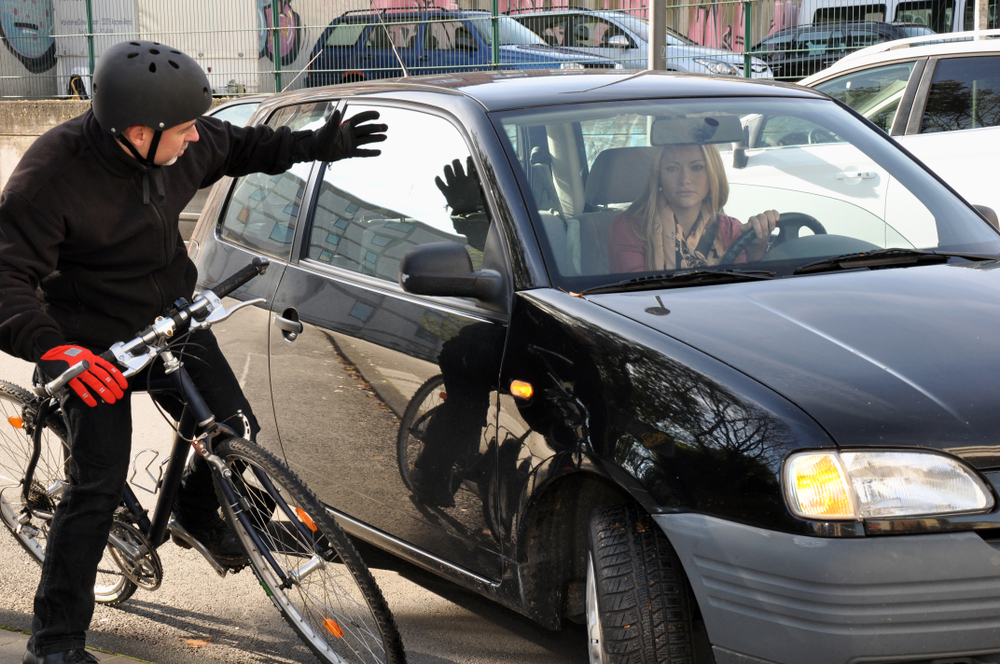 No, and there are two separate reasons why.
For an adult on a standard bicycle, there is no helmet requirement to violate in the first place. For riders under fourteen and for class three e-bike riders, a requirement does exist, and the statute goes out of its way to keep it out of the courtroom.
Vehicle and Traffic Law Section 1238, subdivision 7, reads:
“The failure of any person to comply with the provisions of this section shall not constitute contributory negligence or assumption of risk, and shall not in any way bar, preclude or foreclose an action for personal injury or wrongful death by or on behalf of such person, nor in any way diminish or reduce the damages recoverable in any such action.”
Read the three separate things that sentence does. Not wearing a helmet is not contributory negligence. It cannot bar your claim. And it cannot reduce your damages.
Adjusters raise it anyway, because it works on people who do not know this. A rider who believes they were partly at fault negotiates against themselves before anyone else has to.
Who Actually Has to Wear a Helmet in New York?
Fewer people than most riders assume, and the rules differ by age and by what you are riding.
| Rider | Helmet required? |
| Under 1 year old | May not be carried as a passenger at all |
| Age 1 to under 5, as a passenger | Yes, plus a separate attached seat |
| Age 1 to under 14, operator or passenger | Yes |
| Age 14 and older, standard bicycle | No |
| Any age, class three bicycle with electric assist | Yes |
Violations carry a civil fine capped at fifty dollars, and summonses for minors go to the parent or guardian. None of that changes subdivision 7.
You Have the Same Rights as a Car. Also the Same Duties.
Section 1231 is short and blunt: a person riding a bicycle on a roadway “shall be granted all of the rights and shall be subject to all of the duties applicable to the driver of a vehicle,” except where a bicycle-specific rule applies or the provision cannot sensibly apply.
The bicycle-specific rule that comes up in nearly every claim is Section 1234. It requires riding in a usable bike lane, or near the right-hand curb or on a usable right shoulder. Carriers quote the first half of that sentence and stop.
The second half is where the cases are won. The statute carves out an exception when a rider is preparing for a left turn, or “when reasonably necessary to avoid conditions that would make it unsafe to continue along near the right-hand curb or edge.”
It then names those conditions: fixed or moving objects, vehicles, bicycles, pedestrians, animals, surface hazards, or “traffic lanes too narrow for a bicycle or person on in-line skates and a vehicle to travel safely side-by-side.”
The word usable carries weight too. A bike lane full of gravel, glass, a storm grate, or a parked car is arguably not a usable lane, and a rider who left it did what the statute allows.
Call (716) 284-7126 if you have been told you were in the wrong place on the road. That claim is frequently wrong.
The Equipment Rules a Carrier Will Go Looking For
Expect questions about your lights. Section 1236 sets the requirements, and they apply from one half hour after sunset to one half hour before sunrise.
| Equipment | Requirement |
| Front lamp | White light, visible at least 500 feet ahead |
| Rear light | Red or amber, visible 300 feet to the rear |
| Side visibility | At least one light visible from 200 feet on each side |
| Audible signal | Bell or similar device audible at 100 feet, no sirens or whistles |
| Brakes | Must be able to skid the braked wheels on dry, level, clean pavement |
Wheel reflectors are also specified: colorless or amber on the front wheel, colorless or red on the rear wheel.
Being short a light is not the end of a claim. It is a fact the other side will try to convert into fault, and it is answerable, particularly where the crash happened in daylight or where the driver’s own conduct caused the collision regardless of lighting.
Lighting also matters less to the outcome than carriers imply. The National Highway Traffic Safety Administration counted 1,103 bicyclists killed and about 52,887 injured in 2024, and found that while 52 percent of those deaths happened in the dark, 44 percent happened in daylight.
Is There a Three-Foot Passing Law in New York?
No, and anyone telling you otherwise is repeating something that has not become law.
Section 1122-a requires a driver overtaking a bicycle from behind to “pass to the left of such bicycle at a safe distance until safely clear thereof.” It contains no measurement in feet.
That absence is not as bad for riders as it sounds. “Safe distance” is judged by the circumstances, which in a narrow lane on a busy street can mean considerably more than three feet. A fixed number would also become a ceiling in cases where more room was plainly needed.
Two other statutes come up often. Section 1214 prohibits opening a vehicle door on the traffic side “unless and until it is reasonably safe to do so,” which is the dooring rule.
And Section 1146 imposes a duty on every driver to “exercise due care to avoid colliding with any bicyclist, pedestrian, or domestic animal upon any roadway,” with a rebuttable presumption where a failure of due care causes physical injury.
Where People Actually Ride Here
Niagara Falls has two distinct riding environments, and they produce different claims.
On the gorge side, New York State Parks maintains trails along the rim and shoreline, and cycling is permitted on the Niagara Gorge Rim and Shoreline trails specifically rather than throughout the trail system. Crashes there tend to involve trail surface conditions, other users, and the crossings where a trail meets a road.
On the street side, the city changed shape. Empire State Development’s USA Niagara projects removed a two-mile stretch of expressway along the gorge rim from Main Street to Findlay Drive, and rebuilt Whirlpool Street and Third Street as a two-lane complete street with on-street parking and traffic calming. An earlier project replaced the elevated interchange at John B. Daly Boulevard with a roundabout.
Slower streets are safer streets. They are also unfamiliar streets to a large share of the drivers using them, and roundabouts in particular are where local riders get hit by visitors who do not know how to yield in one.
One practical note for riders planning a route: the Empire State Trail does not reach Niagara Falls. Its western terminus is Buffalo, so the connection north is on local roads and park trails.
Your Bicycle Is Not a Motor Vehicle. Your Claim Still Runs Through One.
Under Section 125 a motor vehicle is one propelled by something other than muscular power, so a pedal bicycle sits outside that definition entirely. Riders assume that puts them outside the auto insurance system too.
It does the opposite. A rider struck by an insured car draws first-party benefits from that car’s policy, and is then treated as a covered person under the no-fault article, which brings a statutory injury threshold into play on the pain and suffering side. New York narrowed that threshold in 2026, and the new rules attach to when a lawsuit is filed rather than to when the crash happened.
That combination is where riders lose money without ever knowing it happened. We walk through the coverage and the threshold at the first meeting, before any recorded statement.
For how the coverage stacks when a driver is uninsured or flees, see our helmet, fault, and insurance guide for New York cyclists and how we handle Niagara Falls pedestrian accidents.
How Long Do You Have to Act?
Three years for most claims against a private driver, and dramatically less if a public entity is in the picture.
CPLR 214 sets the three-year period for personal injury. That is the number most riders hear, and it is the one that leads people to wait.
The shorter deadlines are the dangerous ones. A claim against a city, county, or school district requires a formal notice of claim within 90 days under General Municipal Law 50-e, with suit filed within one year and 90 days.
A claim involving the State of New York, which matters if a crash happened on state park land or a state road, runs on the schedule in the Court of Claims Act.
Given how much of the riding here happens on or beside state property, that 90-day clock deserves attention before anything else.
Why Bring a Bicycle Case to Lewis & Lewis
 Because these claims are won by refusing the blame narrative, and that takes someone who knows what the other side is actually thinking.
Michael T. Coutu has over 20 years as an injury lawyer, holds the AV Preeminent Peer Review Rating from Martindale-Hubbell, and spent part of his career as a defense attorney. Emily F. Janicz, the firm’s president, has been named to the National Trial Lawyers Top 100.
On the injury side our fees are contingent. We do not get paid unless you do, and there are never any up-front costs.
One warning we give every rider who calls: an early offer to an unrepresented cyclist is a number chosen to close a file, not to value an injury. A release signed at that stage ends the matter permanently.
Frequently Asked Questions
I was on an e-bike. Are the rules the same?
Not entirely. Electric-assist bicycles have their own treatment in the Vehicle and Traffic Law, and a class three e-bike requires a helmet at any age. Which class you were riding, and how fast it was capable of going, can affect both the traffic rules that applied and how a carrier evaluates the claim.
I crashed on a gorge trail, not a street. Do I have a case?
Possibly, but it is a different kind of case. A trail crash may involve premises liability against whoever maintained the surface rather than a driver’s auto policy, and if the land is state park property, much shorter notice deadlines apply.
My child was hit riding in our neighborhood. Does the helmet rule cut against us?
No. Subdivision 7 protects a claim brought on behalf of a child exactly as it protects an adult’s, and it says so in terms. It expressly covers an action brought “on behalf of” the person.
The driver says I came out of nowhere. How do you fight that?
With the physical evidence, mostly. Damage location on the vehicle, where the bike ended up, sight lines at the location, and whether the driver’s account is consistent with the point of impact. Statements made at a scene are often wrong in ways that can be demonstrated.
Who pays for my bicycle?
Not no-fault, which covers people rather than property. Damage to the bike is pursued as a property claim against the driver’s liability coverage, and it is worth documenting with the purchase records and photographs before the bike is discarded.
Do Not Argue With the Adjuster. Let Someone Else Do It.
Riders lose money by explaining themselves. Every recorded call is an opportunity to say something about speed, position, or lighting that gets used later.
Lewis & Lewis, P.C. is at 8803 Niagara Falls Blvd, Niagara Falls, NY 14304. Call (716) 284-7126 for a free consultation. You can also read about Buffalo pedestrian accident claims and the broader NY personal injury process.
Get Help Today
Fill out the form below, and one of our personal injury attorneys will contact you within 24 hours.
"*" indicates required fields
Satisfied Client Stories
”I liked Lewis & Lewis from the beginning when they helped me sort through all the paperwork-related to my injury. They really helped me get organized. But what really impressed me was when my Lewis & Lewis personal injury lawyer obtained thousands of dollars in workers’ compensation benefits that I didn’t even know I was entitled to. My attorney worked hard to get me paid.
Fred T.Kenmore, NY - Steam Fitter
SEE TESTIMONIALS