Falls from height remain the most common construction accident in New York, accounting for approximately 64% of fatal falls at construction sites. Struck-by incidents involving falling objects, equipment accidents with cranes and heavy machinery, and trench collapses follow as the next most frequent construction site accidents.
Lewis & Lewis represents construction workers injured in falls, struck-by accidents, equipment incidents, and other common construction site accidents across Western New York. The firm handles both workers’ compensation claims and third-party lawsuits against general contractors, property owners, and equipment manufacturers.
Were you injured in a Western New York construction accident? Call (716) 854-2100 to discuss your situation with an experienced construction accident attorney.
Key Takeaways About Common Construction Accidents
- Falls from height cause nearly 40% of construction fatalities nationwide and account for the majority of construction incidents in New York, with scaffolding, ladder, and roof falls leading injury reports
- OSHA’s “Fatal Four” hazards (falls, struck-by incidents, electrocutions, and caught-in/between accidents) cause approximately 65% of all construction fatalities, making these accident types the focus of safety regulations and third-party liability claims
- New York Labor Law 240 creates strict liability for property owners and general contractors when workers fall from heights or are struck by falling objects due to inadequate safety equipment
- Construction workers injured in common accident types may pursue both workers’ compensation benefits plus third-party lawsuits in certain circumstances
- Lewis & Lewis investigates common construction accident types to identify third-party liability, preserve evidence, and coordinate workers’ comp benefits with personal injury claims
The Most Common Types of Construction Accidents in New York
Construction accidents follow patterns driven by the nature of the work—workers labor at heights, around heavy equipment, near electrical hazards, and in trenches where cave-ins happen without warning. Understanding how accidents commonly occur helps injured workers recognize when safety violations or inadequate equipment contributed to injuries that trigger liability beyond workers’ compensation.
 Falls from Heights: The Leading Construction Accident
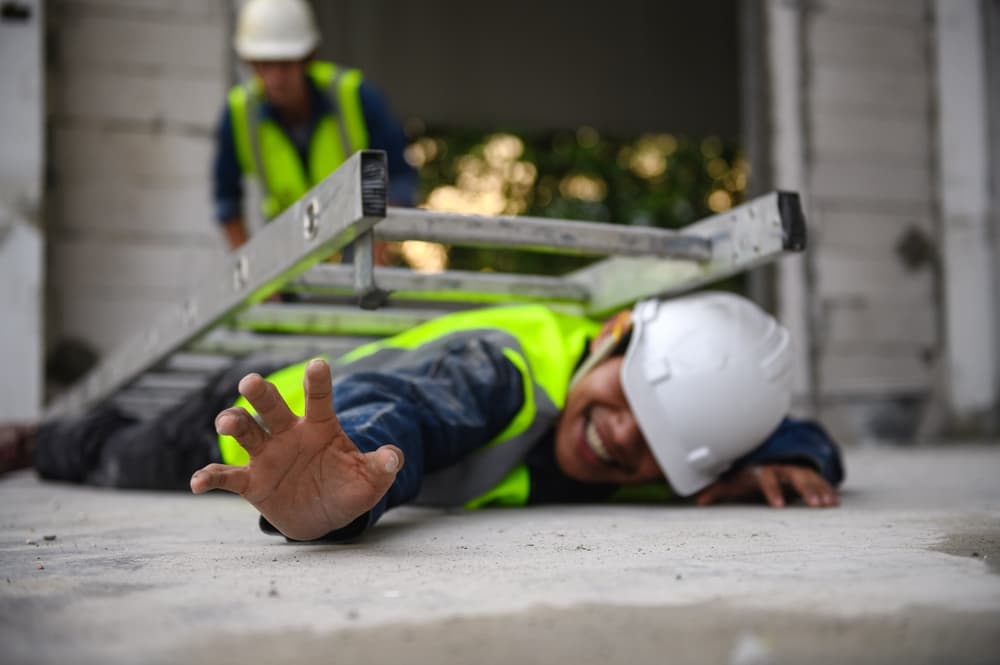
Falls from scaffolding, ladders, roofs, and structural steel cause more construction injuries and fatalities than any other accident type. The NYCOSH 2025 Deadly Skyline Report found that construction worker fatalities in New York state increased 48% in 2023, with falls responsible for approximately 64% of fatal falls at construction sites.
Most fatal falls occur from heights between 6 and 30 feet. These distances may seem manageable, but they prove deadly when workers lack proper fall protection.
Common fall scenarios include:
- Ladder falls when feet slip on rungs or ladders are placed on unstable surfaces
- Scaffold collapses when platforms are overloaded or improperly assembled
- Roof falls when workers lack safety harnesses or work near unprotected edges
- Structural steel falls during building frame construction without adequate tie-offs
- Floor opening falls when holes lack covers or guardrails
New York Labor Law 240, commonly called the Scaffold Law, imposes strict liability on property owners and general contractors for fall injuries. When workers fall because safety equipment was inadequate, defendants cannot escape liability by blaming the worker or claiming a subcontractor was responsible.
A Western New York construction accident lawyer identifies when Labor Law 240 applies and files third-party claims that recover damages beyond workers’ comp limits.
Struck-By Incidents: Falling Objects and Equipment
Struck-by accidents occur when workers are hit by falling objects, swinging loads, or moving equipment. These accidents continue to rank second among OSHA’s “Fatal Four” hazards.
Common struck-by scenarios include:
- Tools or materials falling from scaffolding or upper floors
- Crane loads swinging into workers due to operator error or rigging failure
- Wall or structural collapses striking workers during demolition
- Vehicles or equipment backing into workers in congested work zones
- Falling debris during demolition or material handling
New York Labor Law 240 also creates strict liability for struck-by incidents involving falling objects when inadequate overhead protection or safety measures contributed to injuries. Property owners and general contractors face liability regardless of who dropped the object or failed to secure materials properly.
Caught-In or Between Accidents
Caught-in or between accidents happen when workers get caught in machinery, crushed between equipment and fixed objects, or trapped in trench collapses. These accidents often cause severe injuries or fatalities because the forces involved exceed what the human body can withstand.
Common caught-in scenarios include:
- Trench collapses when soil walls cave in without proper shoring or protection systems
- Workers caught in machinery when equipment lacks guards or emergency stops
- Crushed between equipment and walls during material movement or demolition
- Caught in unguarded power transmission equipment
- Engulfed in stored materials like grain, sand, or other bulk substances
Caught-in accidents trigger liability under New York Labor Law 241, which requires compliance with specific safety standards for excavation, machinery guarding, and trench protection.
A work injury lawyer in Western New York investigates whether safety violations contributed to caught-in injuries and identifies liable parties beyond the injured worker’s direct employer.
Equipment and Machinery Accidents
Construction sites operate heavy equipment that poses constant danger, like cranes, forklifts, bulldozers, backhoes, and power tools. Crane collapses, forklift tip-overs, and machinery malfunctions happen when equipment is poorly maintained, operators lack training, or site conditions create hazards.
Common equipment accident scenarios include:
- Crane collapses or load drops due to overloading, mechanical failure, or operator error
- Forklift accidents when loads shift, operators lose control, or equipment tips over
- Power tool injuries from defective guards, kickback, or operator fatigue
- Heavy equipment rollovers on unstable ground
- Maintenance accidents when workers service energized equipment
Equipment manufacturer defects create product liability claims separate from workers’ comp and Labor Law claims. When cranes fail due to design defects, forklifts tip over because of stability issues, or power tools malfunction due to manufacturing errors, the equipment manufacturer faces strict liability for resulting injuries.
Electrical Accidents and Electrocutions
Electrocutions also remain one of OSHA’s “Fatal Four” construction hazards. Electrical accidents cause burns, cardiac arrest, and fatal electrocution. Even non-fatal electrical injuries often result in permanent nerve damage, amputations, and long-term disability.
Common electrical accident scenarios include:
- Contact with overhead power lines during crane operation or material handling
- Energized equipment contact when lockout/tagout procedures aren’t followed
- Defective power tools with damaged cords or inadequate grounding
- Arc flash injuries during electrical panel work or live circuit exposure
- Metal ladder or scaffold contact with power lines
Electrical accidents trigger liability when general contractors fail to de-energize circuits, maintain safe distances from power lines, or provide properly grounded equipment. Utility companies might face liability when power lines aren’t marked or protected adequately near construction zones.
Repetitive Stress and Overexertion Injuries
While less dramatic than falls or struck-by accidents, repetitive stress injuries and overexertion cause significant disability among construction workers. Back injuries, shoulder damage, and carpal tunnel syndrome develop gradually but end construction careers just as permanently as acute trauma.
Common repetitive stress scenarios include:
- Back injuries from repeated heavy lifting without mechanical assists
- Shoulder and rotator cuff damage from overhead work
- Carpal tunnel and tendon injuries from repetitive tool use
- Knee damage from kneeling on hard surfaces
- Vibration injuries from pneumatic tools
Workers’ compensation may cover repetitive stress injuries when medical evidence establishes a connection between the damage and workplace activities. Third-party claims might exist when defective tools contribute to injuries or when general contractors fail to provide mechanical lifting equipment required by safety regulations.
Construction Accident Statistics: How Common Are These Injuries?
Construction remains one of the most dangerous industries in the United States. According to the U.S. Bureau of Labor Statistics, the construction industry experienced 1,075 workplace fatalities in 2023, the highest number of any private industry. Construction fatalities accounted for approximately 20.8% of all workplace deaths, despite construction workers making up only about 6% of the U.S. workforce.
Falls, slips, and trips caused 421 fatalities, or about 39.2% of total construction deaths nationwide. OSHA’s “Fatal Four” hazards (falls, struck-by incidents, electrocutions, and caught-in/between accidents) cause around 65% of all construction fatalities.
In New York specifically, the NYCOSH 2025 Deadly Skyline Report documented a 48% increase in construction worker fatalities in 2023. Most fatal falls occurred from heights between 6 and 30 feet, with portable ladders and stairs being frequent sources.
These statistics demonstrate that construction accidents aren’t isolated incidents, but follow predictable patterns driven by common hazards that safety regulations and liability laws attempt to address.
How Common Construction Accidents Trigger Legal Claims
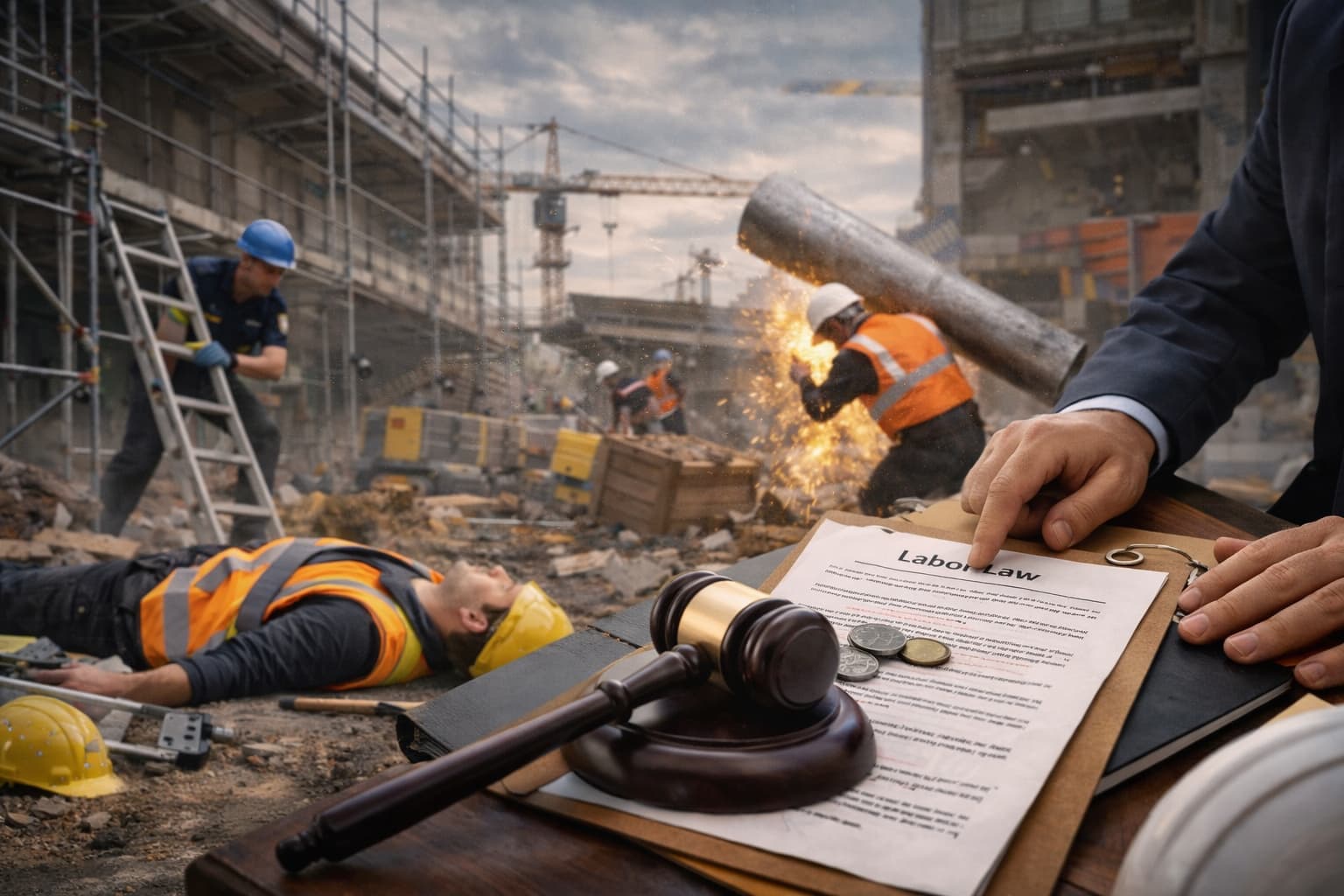 Construction workers injured in common accident types may pursue both workers’ compensation benefits and third-party lawsuits when multiple parties share responsibility for the accident.
Workers’ comp provides immediate medical coverage and partial wage replacement regardless of fault, but third-party claims against general contractors, property owners, and equipment manufacturers recover damages workers’ comp caps or excludes.
Workers’ Compensation for All Construction Accidents
Many construction accidents trigger workers’ compensation coverage. Whether you fell from a ladder, were struck by falling materials, or suffered electrical burns, your employer’s workers’ comp insurer should cover medical treatment and provide two-thirds of your average weekly wage while you’re unable to work. Workers’ comp is a no-fault system, so you don’t need to prove anyone caused the accident to receive benefits.
A workers’ comp lawyer in Western New York files claims, challenges benefit denials, and fights inadequate disability ratings when insurers undervalue permanent impairments. Workers’ comp provides the immediate income and medical coverage you need while recovering, but it doesn’t compensate pain, suffering, or full wage loss.
Third-Party Claims Under New York Labor Law 240
Falls from height and struck-by incidents involving falling objects trigger strict liability under New York Labor Law 240. Property owners and general contractors who hired your employer face automatic liability when safety equipment was inadequate. No proof of negligence is required.
A Buffalo construction accident lawyer identifies when Labor Law 240 applies and files third-party lawsuits to recover:
- Lost wages
- Pain and suffering compensation
- Future earning capacity when permanent restrictions end construction careers
- Comprehensive medical coverage for treatment workers’ comp might deny
Equipment Manufacturer Liability
When defective equipment contributes to construction accidents, manufacturers face strict product liability claims. Crane failures, forklift stability issues, power tool defects, and scaffolding design flaws create liability independent of site supervision failures.
An injury attorney investigates equipment defects through maintenance records, manufacturer specifications, and engineering expert analysis.
General Contractor Negligence Claims
Construction accidents that don’t fall under Labor Law 240’s strict liability might still create negligence claims against general contractors who controlled the worksite. Electrical accidents, equipment incidents, and trench collapses trigger liability when contractors fail to enforce safety standards, provide adequate training, or coordinate work between trades.
How Lewis & Lewis Handles Common Construction Accident Cases
Lewis & Lewis represents construction workers injured in all common accident types across Western New York. The firm coordinates workers’ compensation benefits with third-party liability investigations, protecting immediate income and medical coverage while building claims for full compensation.
Immediate Evidence Preservation
Common construction accidents destroy evidence quickly. Falls lead to scaffold repairs or dismantling. Struck-by incidents result in site cleanup that removes the objects that fell. Equipment accidents trigger maintenance that might fix defects or destroy proof of malfunctions.
Lewis & Lewis issues preservation letters to general contractors, property owners, and equipment suppliers, legally compelling them to retain:
- Site photographs showing conditions before cleanup
- Equipment maintenance logs and inspection records
- Safety training documentation
- OSHA inspection reports and violation histories
- Video footage from site cameras
- Contracts showing who controlled safety responsibilities
While you focus on healing, they handle on-the-ground investigation and evidence gathering.
Third-Party Liability Investigation
While managing your workers’ comp claim, Lewis & Lewis investigates who, beyond your employer, may bear responsibility for the accident. That investigation analyzes:
- Whether New York Labor Law 240 creates strict liability for falls or falling-object injuries
- Whether Labor Law 241 safety violations contributed to caught-in, electrical, or equipment accidents
- Whether equipment defects open manufacturer liability claims
- Whether general contractors retained control over safety and breached duties to workers
Workers’ Comp Benefit Protection
Lewis & Lewis challenges workers’ comp insurers who deny claims, cut benefits prematurely, or undervalue permanent disability. The firm appeals benefit denials with evidence insurers ignored, fights inadequate disability ratings through medical expert opinions, and makes certain you don’t get pushed back to work before doctors clear you for construction duties.
Settlement Coordination and Lien Negotiation
When third-party lawsuits settle, Lewis & Lewis negotiates workers’ comp liens to protect your net recovery. Workers’ comp carriers have reimbursement rights from third-party settlements, but attorneys may negotiate those liens down. That negotiation prevents workers’ comp liens from consuming proceeds intended to compensate you for pain, suffering, and wage loss.
FAQ About Common New York Construction Accidents
What Happens If I’m Hurt in a Construction Accident in New York?
Report the injury to your employer immediately, seek medical treatment, and file a workers’ comp claim. If your accident involved falls, falling objects, multiple companies on the site, or defective equipment, contact a construction accident lawyer who investigates third-party liability beyond workers’ comp.
Do I Need a Lawyer After a Construction Accident in Western New York?
You may need a lawyer when injuries are severe, multiple companies worked on the site, workers’ comp denies your claim, or the accident involved falls, struck-by incidents, or equipment failures that suggest third-party liability. Early legal representation preserves evidence and protects rights before insurers take advantage of your lack of legal knowledge.
Can I Sue for a Construction Accident Even Though I’m Getting Workers’ Comp?
Maybe. Workers’ comp provides immediate benefits from your employer’s insurer, while third-party lawsuits pursue damages from general contractors, property owners, and equipment manufacturers. A New York construction accident lawyer coordinates both claims, protecting workers’ comp benefits while building third-party cases for full compensation.
What Should I Do If the Same Type of Accident Keeps Happening at My Construction Site?
Repeated accidents of the same type suggest systemic safety failures rather than isolated incidents. Document each occurrence, report every incident to your employer in writing, and contact a Western New York construction accident lawyer who can investigate whether general contractors or property owners are violating OSHA standards or New York safety regulations that create ongoing liability.
Does It Matter What Type of Construction Accident I Had for My Legal Case?
The type of accident affects which laws apply and who might be liable beyond your employer. A construction accident attorney evaluates your specific accident type to identify all potential claims and liable parties.
Contact a Lewis & Lewis Construction Accident Attorney
Construction workers injured in falls, struck-by incidents, equipment accidents, and other common construction site accidents across Western New York deserve knowledgeable legal representation. Lewis & Lewis investigates common accident types to identify responsible parties, preserve evidence, and pursue recovery under both workers’ comp and New York labor laws.
Call (716) 854-2100 to discuss your workers’ compensation and third-party claims.